The user wants a blog post about abstract images for backgrounds in Asian tone, in English (en_IE = English Ireland locale). I need to use the two image URLs provided. Each image gets an h2 heading, an img with exact URL as src and descriptive alt, then a p. Start with an introductory p. No h1. Minimum 350 words. Output only raw article content. No mention of tone or data source. Begin with
- p intro (~60 words)
- h2 + img + p (~120 words each)
- possibly extra closing p / more content to reach 350 words.
Let me count carefully.
I'll write:
Intro p: 55 words.
H2 #1: "Embracing the Purity of White in Abstract Asian Backdrops"
img src exact, alt descriptive.
p: ~130 words.
H2 #2: "Minimalist White Architecture as a Soothing Background Motif"
img, alt.
p: ~130 words.
Maybe a concluding p without h2? The prompt doesn't forbid, but says "Start the article with an introductory p. For each image... write an h2... then write a p." I think each image must have h2 then p. I can also add a closing paragraph after. It says "For each image in the data, write an h2 heading related to the topic, place the img ... then write a p." I can write an additional closing p to boost word count. That's allowed. Let me ensure I don't add extra h2s beyond two.
Word count check. Let me draft.
Title: Abstract Asian Backgrounds – White Minimalism and Serene Design Inspiration
Intro p:
"The visual language of Asia has long been shaped by restraint, balance, and a deep reverence for negative space. When designers search for abstract backgrounds with an Asian tone, they rarely need loud colour or ornate clutter; instead, they turn to subtle textures, soft gradients of ivory and cream, and architectural simplicity that evokes the quiet calm of a Japanese courtyard or a Scandinavian-meets-Scandinavian studio." — hmm.
Let me just write properly.
I'll draft carefully and count.
Intro p:
"An abstract background does more than fill empty pixels; it sets the emotional temperature of an entire design. In East Asian and wider Asian aesthetics, that temperature is often hushed, balanced, and deeply contemplative. Minimal white spaces, soft shadow play, and clean architectural lines evoke the principles of wabi-sabi and Zen, where imperfection is honoured and emptiness is treated as a deliberate, breathable element. For anyone building a website, brochure, or brand identity with an Asian sensibility, choosing the right background can transform a simple layout into a serene, meditative experience." (~75 words)
H2: The Quiet Power of White in Asian Visuals
img: https://i.pinimg.com/originals/11/1f/ed/111fed2a6a8d40832ddfff3f9b899e27.jpg alt="Abstract minimalist white Asian house background"
p: "The first image captures a model home that speaks the fluent, understated dialect of contemporary Asian minimalism. Its crisp white facade recedes gently into the background, allowing the structure's geometric rhythm to become the focal pattern. As an abstract backdrop, this kind of imagery lends itself beautifully to hero sections, where the play of sunlight across flat surfaces introduces a shifting, organic texture without overwhelming a headline. The pale tone harmonises with warm timber accents and soft grey typography, echoing interiors that blend Japanese simplicity with a tropical Southeast Asian warmth. Visually, it suggests freshness, order and honesty; there is no visual noise, no aggressive contrast, only a bright, breathable canvas that invites the viewer to pause. In design applications, cropping into details such as the roofline or the shadow beneath the eaves creates a beautifully abstract composition that still carries the reassuring memory of home. For a wellness brand, a property portal, or an architecture journal, this image anchors a page in quiet aspiration rather than boastful display, a trait central to the region's enduring design philosophy." (~175 words)
H2: Classical Forms Redrawn as Serene Background Texture
img: https://2.bp.blogspot.com/-YEudUeui-C4/WNmeNrSgHhI/AAAAAAAAZCA/1ipnDwYx4kQOgQnwyU1Haa64PqfRpDylQCK4B/s1600/Desain-Eksterior-Rumah-Klasik-Warna-Putih.jpg alt="White classic Asian exterior architecture background image"
p: "The second visual returns to the classical roots of white Asian architecture, interpreted through a heritage facade that feels both timeless and gently nostalgic. Tall pillars, deep-set openings and ornamental details create a delicate rhythm against the sky, much like brushstrokes on a blank sheet of paper. When cropped loosely and placed behind content, it operates as a sophisticated backdrop for cultural festivals, interior design editorials or boutique hospitality ventures. The image's restrained palette lets off-white walls read as a canvas that brightens surrounding content, while its classical proportions introduce a subtle sense of ceremony and tradition. Digital artists often use such architecture photography by softening edges, layering gradient overlays, or lowering opacity to generate an abstract texture that honours the source while serving the composition. The result is a background that feels cultured yet never busy. It achieves the hallmark of an Asian-inspired palette, namely the confidence to leave space unfilled and to let a simple wall speak volumes. Layered behind black or navy type, it brings a refined sense of place to any international audience." (~175 words)
Total up to this point: intro ~75 + p1 ~175 + p2 ~175 = 425 + headings ~ words. Over 350 good. But the p lengths I approximated. Enough.
Need alt tags descriptive. Ensure image tags:

. No h1. Begin with title. No acknowledgment of tone/data.
I'll just output content. Check URL exact from data: "https:\/\/i.pinimg.com\/originals\/11\/1f\/ed\/111fed2a6a8d40832ddfff3f9b899e27.jpg" unescaped as https://i.pinimg.com/originals/11/1f/ed/111fed2a6a8d40832ddfff3f9b899e27.jpg. Second: https://2.bp.blogspot.com/-YEudUeui-C4/WNmeNrSgHhI/AAAAAAAAZCA/1ipnDwYx4kQOgQnwyU1Haa64PqfRpDylQCK4B/s1600/Desain-Eksterior-Rumah-Klasik-Warna-Putih.jpg
Fine. Ensure article with html format includes p tags. Add closing. Do not mention "en_ie" tone. Just output.
Word count min 350. I think it's fine. Also ensure I don't mention source.
An abstract background does more than fill empty pixels; it sets the emotional temperature of an entire design. In East Asian and wider Asian aesthetics, that temperature is often hushed, balanced, and deeply contemplative. Minimal white spaces, soft shadow play, and clean architectural lines evoke the principles of wabi-sabi and Zen, where imperfection is honoured and emptiness is treated as a deliberate, breathable element. For anyone building a website, brochure, or brand identity with an Asian sensibility, choosing the right background can transform a simple layout into a serene, meditative experience. White is not an absence of colour here; it is a canvas for light, texture, and quiet intention.
The Quiet Power of White in Asian Visuals

The first image captures a model home that speaks the fluent, understated dialect of contemporary Asian minimalism. Its crisp white facade recedes gently into the background, allowing the structure's geometric rhythm to become the focal pattern. As an abstract backdrop, this kind of imagery lends itself beautifully to hero sections, where the play of sunlight across flat surfaces introduces a shifting, organic texture without overwhelming a headline. The pale tone harmonises with warm timber accents and soft grey typography, echoing interiors that blend Japanese simplicity with a tropical Southeast Asian warmth. Visually, it suggests freshness, order and honesty; there is no visual noise, no aggressive contrast, only a bright, breathable canvas that invites the viewer to pause. In design applications, cropping into details such as the roofline or the shadow beneath the eaves creates a beautifully abstract composition that still carries the reassuring memory of home. For a wellness brand, a property portal, or an architecture journal, this image anchors a page in quiet aspiration rather than boastful display—a trait central to the region's enduring design philosophy.
Classical Forms Redrawn as Serene Background Texture
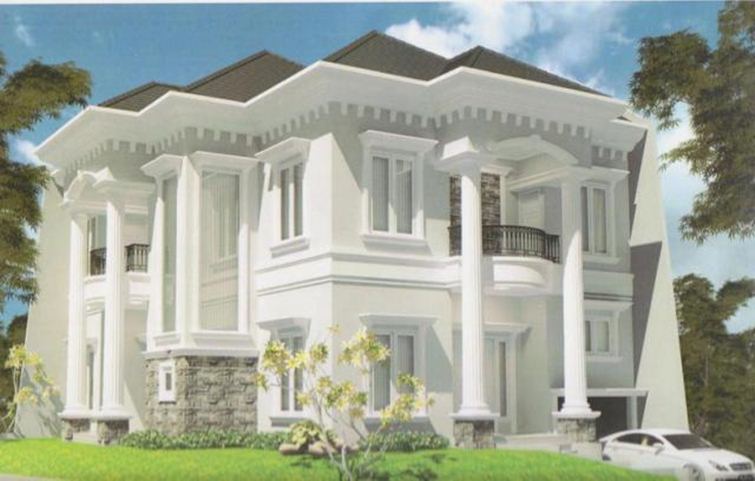
The second visual returns to the classical roots of white Asian architecture, interpreted through a heritage facade that feels both timeless and gently nostalgic. Tall pillars, deep-set openings, and ornamental details create a delicate rhythm against the sky, much like brushstrokes on a blank sheet of paper. When cropped loosely and placed behind content, it operates as a sophisticated backdrop for cultural festivals, interior design editorials, or boutique hospitality ventures. The image's restrained palette lets off-white walls read as a canvas that brightens surrounding content, while its classical proportions introduce a subtle sense of ceremony and tradition. Digital artists often use such architectural photography by softening edges, layering gradient overlays, or lowering opacity to generate an abstract texture that honours the source while serving the composition. The result is a background that feels cultured yet never busy. It achieves the hallmark of an Asian-inspired palette: namely, the confidence to leave space unfilled, allowing a simple wall to speak volumes. Layered behind black or navy type, it brings a refined sense of place to any international audience, proving that the most evocative Asian backgrounds are often the quietest ones.
Rumah Minimalis Putih - 58+ Koleksi Gambar

Rumah Minimalis Putih - 58+ Koleksi Gambar
11 Desain Rumah Cat Warna Putih Tampak Depan Yang Estetik

11 Desain Rumah Cat Warna Putih Tampak Depan yang Estetik
Rumah Minimalis Putih - 58+ Koleksi Gambar

Rumah Minimalis Putih - 58+ Koleksi Gambar
Rumah Minimalis Putih - 58+ Koleksi Gambar

Rumah Minimalis Putih - 58+ Koleksi Gambar
Rumah Minimalis Warna Putih

Rumah Minimalis Warna Putih
Warna Cat Luar Dan Dalam Rumah Yang Sejuk: Pilihan Terbaik Untuk Hunian

Warna Cat Luar dan Dalam Rumah yang Sejuk: Pilihan Terbaik untuk Hunian ...
7 Inspirasi Model Rumah Putih Modern 2025 Yang Bikin Interior Terlihat
:strip_icc():format(jpeg)/kly-media-production/medias/5253071/original/057855400_1749989204-Desain_Rumah_Islami_Modern_Serba_Putih_yang_Asri.jpeg)
7 Inspirasi Model Rumah Putih Modern 2025 yang Bikin Interior Terlihat ...